

What Does Breathable Fabric Mean?
Egyptian cotton wicks moisture out - long fibers, open knit & evaporative cooling.
What Does “Breathable” Mean?
"Breathable" is a popular but often misunderstood term in clothing
Simple airflow (air passing through the fabric like wind through a screen) isn't the main driver of the comfort people associate with it. The real magic, particularly in a high-quality 100% Egyptian cotton knit, is moisture management—how the fabric handles sweat vapor to keep you dry, cool, and non-clammy.
Our 100% Egyptian cotton knit is truly breathable—not just airy, but engineered by nature to move sweat vapor away from your skin for instant, all-day cooling and dryness.
Egyptian cotton’s long-staple fibers create smoother, finer yarns that form a knit structure with tiny natural spaces. Here’s what actually delivers that "extremely comfortable" feel:
- Hygroscopic (moisture-absorbing) nature: Cotton fibers can hold 20–27% of their weight in moisture without feeling damp to the touch. Sweat moves into the fiber, away from your skin, then evaporates outward.
- Evaporative cooling: As vapor escapes through the knit loops, it cools you naturally—exactly why your shirts feel fresh even on warm days.
- Knit construction advantage: The looped jersey structure creates micro-channels for vapor (and some air) while the fabric drapes softly and doesn’t cling when damp. Tighter weaves or heavy fabrics block this; your lightweight knit excels at it.
- Egyptian cotton edge: The extra-long fibers make the fabric stronger, softer over time, and more efficient at this vapor-moving process than shorter-staple cottons. This is a premium feel that performs better for breathability and temperature regulation.
In other words, "breathable" isn’t about big holes or wind blowing through your shirt. It’s about quiet, efficient moisture vapor escape that keeps you dry and comfortable all day—without the clamminess you get from non-breathable synthetics or heavy fabrics. It is about supporting a comfortable microclimate between your skin and the fabric you are wearing. This is why our 100% Egyptian cotton knit feels so much better than cheaper T-shirts.
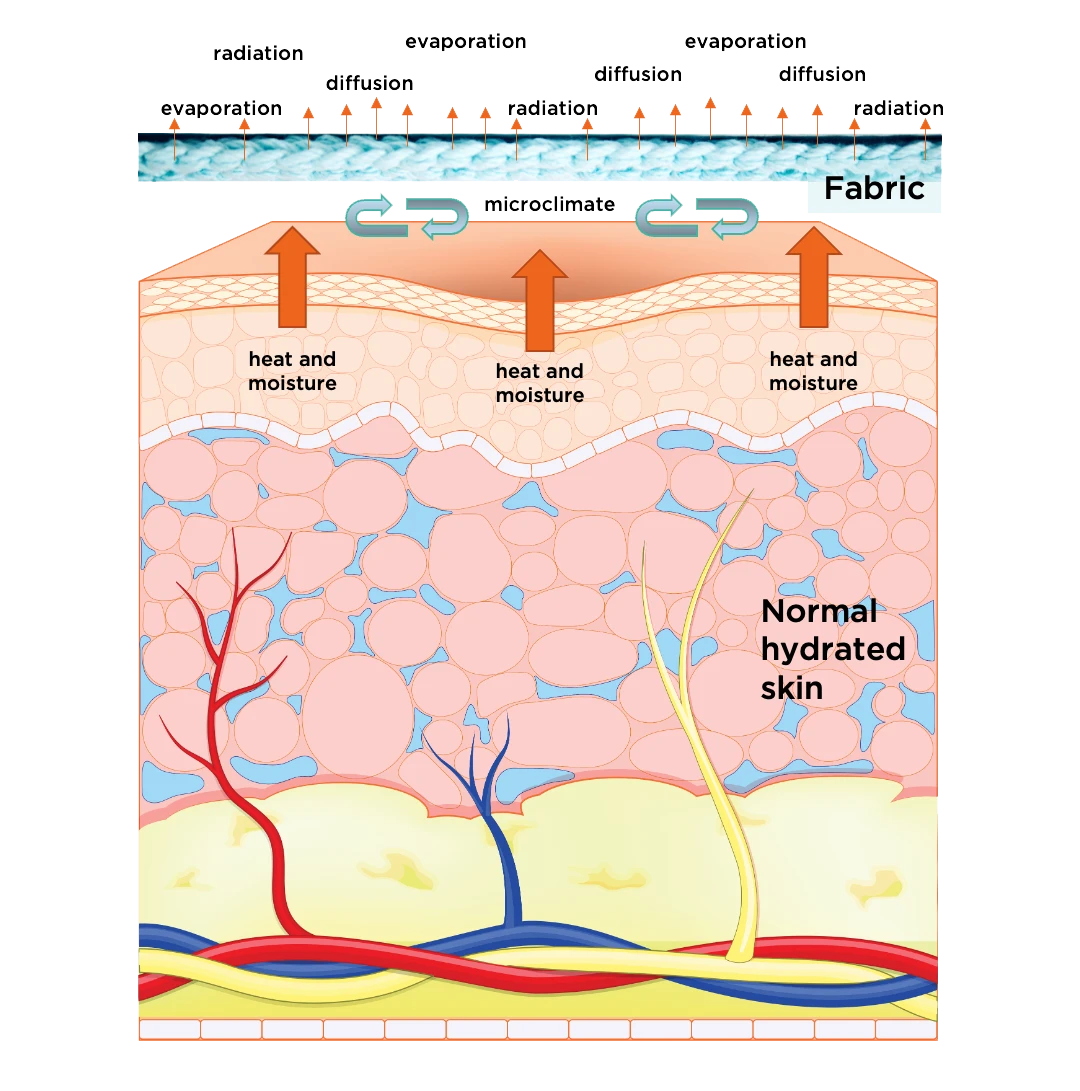
Close-up figure of the skin’s microclimate
Here's a quick, clear comparison chart for breathability (focused on lightweight jersey knit T-shirt fabrics) from Grok (AI). All ratings assume similar construction, weight, and everyday wear conditions.
| Aspect | Egyptian Cotton Knit | Regular Cotton Knit | Polyester Knit |
|---|---|---|---|
| Moisture Absorption | Excellent (holds 20%+ of its weight without feeling damp) | Excellent (but slightly less efficient) | Poor (<1%; hydrophobic) |
| Moisture Vapor Transmission (MVTR – core of "breathable") | Very High (superior vapor escape) | High | Moderate (good only if engineered for wicking) |
| Air Permeability | High (knit loops + long fibers create ideal micro-channels) | High | Moderate to Low |
| Feel When Sweaty | Stays dry & cool; no cling or heaviness | Comfortable, minimal cling | Often clammy, sticky, or stuffy |
| Evaporative Cooling | Excellent (natural body-temp regulation) | Very Good | Good for active wicking, but less natural |
| Quick Drying | Moderate | Moderate | Excellent |
| Overall Breathability Rating (casual/all-day wear) | Superior | Very Good | Fair |
Conclusion
- Egyptian cotton knit wins because its extra-long staple fibers create smoother, finer yarns and a more open-yet-stable knit structure. This maximizes vapor transmission and air flow while feeling premium and soft—exactly why your shirts feel "extremely comfortable."
- Regular cotton knit is still highly breathable (natural fiber advantage), but shorter staples make the fabric slightly coarser and a bit less efficient at moisture management.
- Polyester knit is designed for quick drying and wicking in activewear, but it doesn't absorb vapor like cotton. Sweat stays closer to your skin, leading to that clammy feel many people dislike in everyday T-shirts.
Egyptian cotton knit delivers the true breathable experience people crave—quiet, natural cooling that keeps you dry and fresh without the "plastic-y" sensation of polyester. Regular cotton is close behind, but polyester falls short for all-day comfort.
A Word of Caution
In order to have Egyptian Cotton or any cotton perform as cotton should, do not use “fabric softeners.” A fabric softener coats the natural fibers with a synthetic coating.
Photograph of our 180 gms natural fabric