
Autism Tshirts in Organic Egyptian Cotton
100% organic Egyptian cotton for sensitive skin. No harsh dyes, no loose fibres. A fabric that stays consistent on your skin, without the irritation building up.
Why Fabric Matters More in Autism Tshirts
For many people with autism, getting dressed is not a simple task.
Discomfort doesn’t usually come from one obvious problem. It builds slowly—from friction, heat, or fibres that begin to irritate over time. What most people barely notice can become impossible to ignore.
That’s why fabric isn’t just about how a shirt feels when you first put it on. It’s about how it behaves on your skin—minute after minute, hour after hour.
We didn’t set out to make a “sensory” t-shirt. We set out to make a better one.
The result is a fabric—Egyptian cotton—that many people with sensitive skin, including those with autism, find easier to wear throughout the day.
Get the T-Shirt That Doesn't Distract
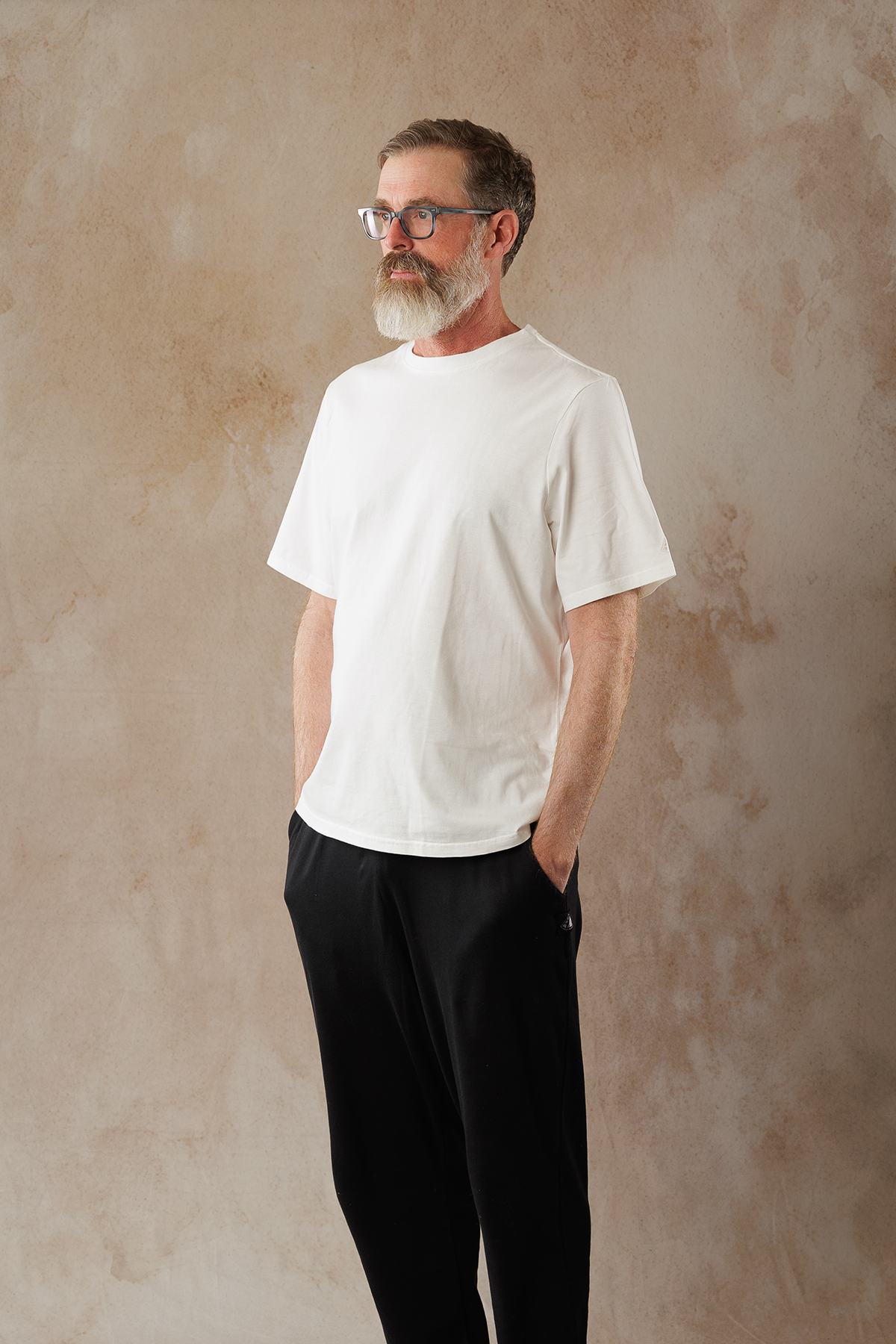


What Makes This Autism Tshirt Different
- Low-friction surface
Extra-long staple Egyptian cotton fibres create a smoother yarn with fewer loose ends, reducing the small, constant irritation that can build throughout the day.
- No harsh dyes
Only low-impact, non-toxic dyes are used. Undyed and unbleached options are available for those who prefer to avoid additional processing altogether.
- Stable temperature, no heat buildup
The knit structure allows air to move freely, helping your skin stay at a steady temperature without trapping heat or moisture.
- Consistent over time
Many shirts feel fine at first, then slowly become uncomfortable. This fabric is designed to behave the same way hour after hour—and wash after wash.
- GOTS Certified Organic
Certified to be free from harmful chemical residues throughout production—from the cotton field to the finished garment.
- Pre-washed, reliable fit
Each garment is washed before it reaches you, so the fit and feel remain consistent after laundering.
A T-Shirt Adults Actually Keep Wearing
Many adults with autism already know which fabrics they can tolerate—and how limited those options can feel.
It’s not about finding something that feels good for a moment. It’s about finding something that doesn’t become a problem later.
Our Egyptian cotton t-shirts are designed to stay consistent on the skin. The fabric remains smooth, the structure holds, and the feel doesn’t shift throughout the day.
One customer told us that after switching, it became difficult to go back to anything else. That’s the level of consistency we aim for.
The Shirt Your Child Will Actually Keep On
If you’re a parent, you already know how this goes.
The shirt goes on. Then comes right back off. Something about it isn’t right—and once it starts, it’s hard to reverse.
When a shirt stops bothering them, everything else in the morning gets easier.
Many parents tell us their children put these on and leave them on—not because they’re told to, but because nothing about the fabric distracts or irritates them throughout the day.
The same Egyptian cotton fabric is used in our youth t-shirts—just sized for smaller bodies.
Simple Care for Sensitive Skin
For those with highly sensitive skin, how a shirt is washed can matter just as much as how it’s made.
Some customers prefer a simpler approach:
- Wash with baking soda
- Rinse with white vinegar
- Use minimal or fragrance-free detergents if needed
- Avoid fabric softeners
This helps keep the fabric free from residues that can build up over time.
Frequently Asked Questions
Are these t-shirts suitable for people with autism who have sensory sensitivities? ▼
Many customers with sensory sensitivities - including people with autism and parents shopping for their children - tell us these are among the few shirts they can wear comfortably for extended periods.
The difference comes from the fabric. Extra-long staple Egyptian cotton creates a smoother, more uniform surface with fewer loose fibre ends, which helps reduce the small, constant irritations that can build throughout the day.
We didn’t design the shirts specifically for autism - but the way the fabric behaves has made them a natural fit for many in the sensory-sensitive community.
Do the t-shirts have tags or internal labels that could be irritating? ▼
We design our garments to minimize internal sources of irritation.
If a label is present and causes discomfort, it can be removed easily without damaging the shirt. Many customers who are sensitive to tags choose to do this as part of their normal routine.
Are the dyes safe for children with chemical sensitivities? ▼
We use low-impact, non-toxic dyes and follow the standards required for GOTS certification, which limits the use of harmful chemical residues throughout the production process.
For those who prefer to avoid dyes altogether, we also offer natural color garments that are fully undyed and unbleached.
Will the fabric feel the same after repeated washing? ▼
Yes - consistency over time is one of the defining characteristics of this fabric.
Many shirts feel fine at first, then gradually become rougher or less comfortable. Egyptian cotton behaves differently. The longer fibres hold together more securely, so the surface remains stable rather than breaking down.
Many customers find that their shirts feel more settled and consistent after multiple washes, not less.
Do you have sizes for both children and adults? ▼
Yes. We offer youth sizes (small through large) as well as men’s and women’s adult sizing.
Every garment is made from the same 100% organic Egyptian cotton - we don’t use a lower-grade fabric for children’s items. The material and construction are consistent across all sizes.
How should I wash these t-shirts for the most sensitive skin? ▼
For highly sensitive skin, some customers prefer a simpler washing approach to avoid residue buildup:
- Wash with baking soda
- Rinse with white vinegar
- Use minimal or fragrance-free detergents if needed
- Avoid fabric softeners
- Wash in cold or warm water This helps keep the fabric free from substances that can remain in the fibres after washing.
Why is Egyptian cotton often more comfortable for people with autism than regular cotton? ▼
The difference comes down to fibre length.
Short-staple cotton fibres leave more loose ends on the surface of the fabric. Those tiny ends are not always visible, but they can create ongoing friction against the skin.
Egyptian cotton fibres are significantly longer. When spun into yarn, they form a smoother, more continuous surface with fewer interruptions.
That smoother structure helps reduce friction - and, importantly, it stays consistent over time rather than breaking down after repeated washing.